
What Aviator's RTP Really Means For Players
A closer look at Aviator's RTP, the probability behind every multiplier, and how the math behind each round actually works.
Read MoreTable of Contents
Get Notified About RTP Updates
Sign up for occasional notes when new data on Aviator's return-to-player rate or multiplier distribution is published.
Multipliers and Probability in Pictures
Visual references for how often different multiplier ranges occur and what that means for the odds of any single round.
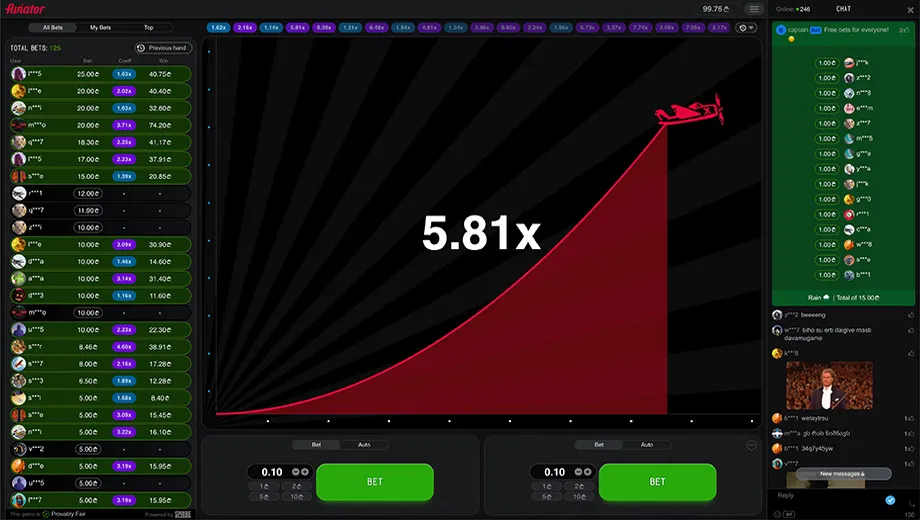




Expert Take on RTP and Odds
 Learn more about our partner casino for Aviator.
Aviator's RTP typically sits around 97%, as shown in the game's own info panel, meaning that across a very large number of rounds, roughly 97% of everything wagered is returned to players collectively, not to any one session.
The probability of hitting a given multiplier drops sharply as the multiplier rises: low multipliers like 1.5x or 2x occur far more often than multipliers above 10x.
Because the crash point is generated independently each round, past results have no bearing on the next one, a run of low crashes does not make a high multiplier more likely to follow.
Understanding this distribution is more useful for setting a realistic cash-out target than any pattern-spotting approach, since the underlying probability does not change from round to round.
Understanding the Odds: A Timeline
How public understanding of Aviator's RTP and multiplier probability has developed since the game launched.
RTP Disclosure
Spribe published a fixed RTP figure for Aviator that individual operators cannot adjust, unlike many traditional slot titles.
Independent RTP Audits
Testing labs began publishing audit results confirming that long-run payouts matched the disclosed RTP figure.
Multiplier Distribution Data
Community-collected round data made it possible to see how often each multiplier range actually occurs in practice.
Clearer Player Education
Ongoing work to explain what RTP and multiplier probability mean in plain terms for players new to crash games.
Reading the Odds Correctly
Three ideas that matter more than any betting system when it comes to Aviator's underlying probability.
Fixed RTP
The 97% figure is built into the game math itself and cannot be changed by an individual casino.
Multiplier Curve
Each multiplier level has its own probability, and that probability shrinks the higher the multiplier climbs.
Independent Rounds
Every round is generated separately, so no sequence of past crashes changes the odds of the next one.

What RTP and Probability Actually Mean
RTP describes the average share of wagers returned to players over a very large number of rounds; it says nothing about what happens in any single session, which can land well above or below that average.
Multiplier probability describes how often a given crash point is likely to appear; together the two figures define what a realistic outcome looks like over time.
How the Multiplier Curve Behaves
A step-by-step look at why the multiplier moves the way it does and what that means for probability.
The Round Starts at 1.00x
Every round begins at the same baseline multiplier before climbing, so no round starts with a built-in advantage or disadvantage.
The Curve Accelerates
The multiplier rises faster the longer a round runs, which is why high multipliers are rarer than low ones even though the curve keeps climbing.
The Crash Point Is Pre-Determined
The exact point where the round ends is fixed by the round's hash before the multiplier starts moving, not decided on the fly as it climbs.
Probability Resets Each Round
A new round means a freshly generated crash point with no memory of the previous one, regardless of how that round ended.

FAQ
Common questions about how Aviator's return rate and multiplier odds actually work.
RTP describes the average percentage of all wagers returned to players across a very large number of rounds; a single session can land well above or below that average purely by chance.
The probability of a round reaching a given multiplier decreases as the multiplier increases, so multipliers above 10x are naturally far less common than ones under 2x.
No. Each round's crash point is generated independently, so no pattern in previous rounds increases the chance of a high multiplier appearing next.
No, bet size has no effect on the probability of any multiplier; it only changes how much is won or lost at whatever multiplier is reached.
Yes, the round math runs on the server, so the same odds and multiplier curve apply whether the game is viewed on mobile or desktop.
No, this is the gambler's fallacy: since each round is independent, a losing streak does not raise the probability of a win on the next round.